
Hocking Hills State Park: What to Do & Expect
Hocking Hills State Park is one of those places that lives up to the hype—waterfalls tucked into narrow gorges, shaded trails that feel a world away, and enough scenic overlooks to fill a long weekend. Knowing what to do and what to expect makes all the difference, especially when the best hikes are spread out across the region.
For a comfortable, convenient home base near the park’s top trails, book your stay with The Hocking Lodging Company, which offers a range of cabins and vacation rentals designed for every kind of traveler. Pack your picnic, this is your guide to Hocking Hills State Park.
About Hocking Hills State Park
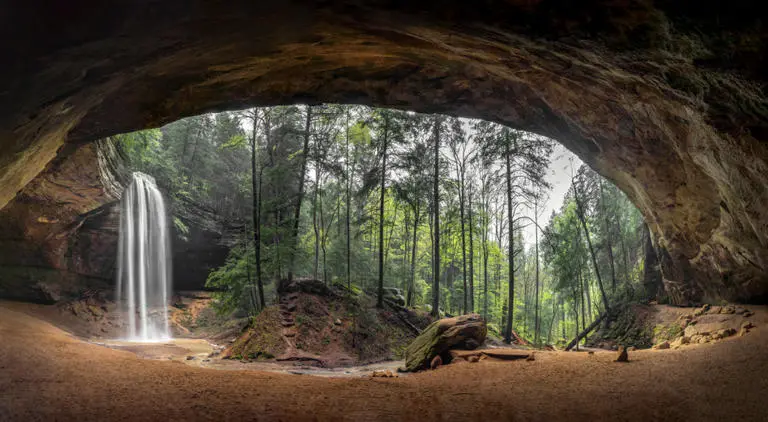
Photo Credit: Kenneth Keifer
Hocking Hills State Park sits in the heart of Hocking County in southeastern Ohio, just south of Logan, and is home to some of the Midwest’s most dramatic natural scenery.
The park features deep sandstone gorges, towering cliffs, seasonal waterfalls, and massive recess caves formed over hundreds of millions of years. Over time, water eroded the soft middle, creating the park’s signature recess caves, narrow gorges, and towering cliffs. This erosion accelerated about 10,000 years ago during the Wisconsin Glacier’s melt, carving the dramatic features seen today.
Adjacent to Hocking State Forest, this state park offers over 25 miles of hiking trails open year-round from dawn to dusk, attracting millions of visitors annually.
About Hiking
The park’s signature landscape is shaped by Black Hand Sandstone, formed over 330 million years ago when the region was covered by an ancient sea. Seven main hiking areas highlight its wonders: Old Man’s Cave, Ash Cave (Ohio’s largest recess cave), Cedar Falls, Rock House (the only true cave), Conkle’s Hollow, Cantwell Cliffs, and the Hemlock Bridge Trail to Whispering Cave.
Getting There
Hocking Hills State Park is located along State Route 664, approximately 5 miles south of Logan and about 50–60 miles southeast of Columbus. The park’s position in the unglaciated Appalachian foothills of Ohio makes it accessible as a day trip from several major cities while still feeling remarkably remote once you step onto the trails.
Driving Directions
From Columbus (approximately 1 hour): Take US-33 South toward Logan. Exit onto State Route 664 South and follow signs to the main park areas.
From Cincinnati (approximately 2 hours): Take I-71 North to US-35 East toward Chillicothe. Connect to US-23 North, then take US-33 North toward Logan. Turn south on State Route 664.
From Cleveland (approximately 3 hours): Take I-71 South to I-70 East. Exit onto US-33 South toward Lancaster and Logan. Follow State Route 664 South to the park.
Main Parking Areas at Hocking Hills State Park
Hocking Hills State Park is made up of several distinct areas, each with its own parking lot and trail access. Knowing where to park ahead of time can save you time, reduce backtracking, and help you avoid the most crowded spots—especially on weekends and during peak seasons.
- Old Man’s Cave Visitor Center
- Ash Cave
- Cedar Falls
- Rock House
- Conkle’s Hollow
- Cantwell Cliffs
- Hemlock Bridge & Whispering Cave
Hiking Trails in Hocking Hills State Park
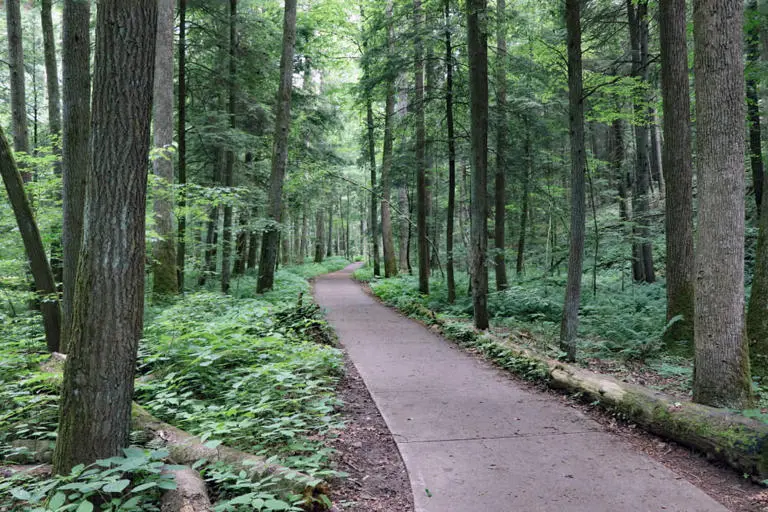
Photo Credit: Jordan Kercheff
With more than 25 miles of marked trails, Hocking Hills State Park offers a mix of easy walks and challenging hikes through sandstone gorges, waterfalls, and forested cliffs. Many routes are one-way loops or out-and-back trails designed to manage crowds and protect the landscape.
Old Man’s Cave Area
The most popular area of the park, Old Man’s Cave, features multiple interconnected trails ranging from short gorge loops to longer rim hikes with canyon views. Expect steep stone steps, narrow passages, and moderate to strenuous sections, with highlights including Upper and Lower Falls, Devil’s Bathtub, and the iconic gorge bridge. The full Grandma Gatewood Trail, which connects to Cedar Falls and Ash Cave, spans about 6 miles and is best suited for experienced hikers.
Ash Cave
Ash Cave is home to Ohio’s largest recess cave and offers one of the park’s easiest hikes. The main trail is a mostly flat, wheelchair-accessible 0.5-mile round trip, while an optional stair loop adds distance and elevation for those looking for a more challenging workout. Seasonal waterfall flow is strongest in late winter and spring.
Cedar Falls
Cedar Falls features the park’s most powerful waterfall by volume and is reached via a moderate hike of about 1 mile round trip. The trail descends into a narrow gorge with stone steps and uneven footing, making it moderately challenging. This area connects to the Grandma Gatewood Trail for longer hikes linking multiple park highlights.
Conkle’s Hollow
Conkle’s Hollow offers two very different hiking experiences within a protected nature preserve. The Gorge Trail is an easy, mostly flat walk along a paved boardwalk beneath towering cliffs, while the Rim Trail is a strenuous loop with steep climbs and exposed edges. Pets are not allowed here, and the Rim Trail is best for experienced hikers only.
Rock House
Rock House is the park’s only true cave, accessed by a moderate hike that descends stone steps and rocky terrain. The out-and-back trail is under 1 mile and leads through a 200-foot tunnel-like cave carved into sandstone cliffs. Inside, the footing can be uneven, and light levels vary, making it a fun but slightly adventurous stop.
Cantwell Cliffs
One of the park’s most rugged and least crowded areas, Cantwell Cliffs is best for confident hikers. The loop combining the Rim and Valley Trails is roughly 1 mile and includes steep stairs, tight passages, and dramatic elevation changes. Expect challenging terrain paired with some of the most striking scenery in Hocking Hills.
Hemlock Bridge & Whispering Cave Trail
This quieter, newer trail is a 1.5-mile one-way hike accessed from the Old Man’s Cave area. The route crosses Hemlock Bridge and descends through forested terrain to Whispering Cave, with stairs and muddy sections along the way. It’s a moderate hike that offers classic scenery without the crowds.
Outdoor Activities Beyond Hiking
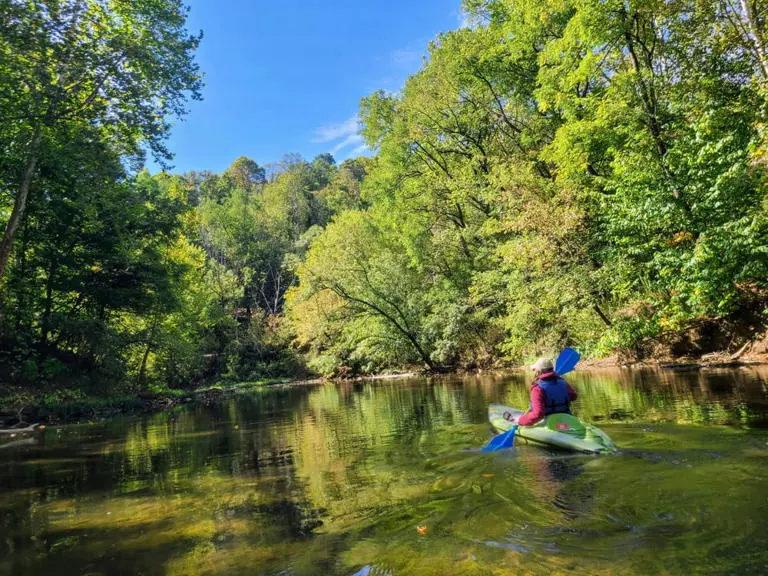
Photo Credit: Nicholas J Klein
While hiking trails draw most visitors to Hocking Hills State Park, the broader region offers a range of outdoor activities for those seeking variety.
Paddling
Canoeing, kayaking, and tubing opportunities exist on the Hocking River and at Lake Logan, located just a few miles from the main park areas. Several outfitters in the region rent equipment and provide shuttle services. Lake Logan also offers swimming at designated beaches during the summer months.
Biking
The Hocking Hills area includes several rail trails and scenic roads suitable for cycling, though there are no long paved bike paths that run directly through the main state park hiking areas. The surrounding countryside offers quiet roads with moderate hills for road cyclists, and nearby Hocking State Forest has trails open to mountain biking.
Wildlife Watching
White-tailed deer are nearly guaranteed sightings throughout the park. Wild turkey, songbirds, hawks, and various salamander species frequent the gorges. Black bears and bobcats have returned to the region but remain elusive—consider yourself fortunate for even a fleeting glimpse.
Nature Programs
Park naturalists lead guided walks, evening talks at the campground and lodge, owl prowls after dark, and seasonal-themed hikes, such as spring wildflower walks. These programs offer insights into geology, ecology, and local history that solo hikers often miss. Check upcoming events schedules at the visitor center or on the ODNR website.
Rock Climbing and Rappelling
These activities are limited to designated areas within Hocking State Forest, not the state park itself. Climbing requires knowledge of current regulations, appropriate gear, and—ideally—experience with sandstone’s unique properties. The rock here is softer and more fragile than granite; it can break without warning.
When to Visit
Hocking Hills is a true four-season destination, and the time of year you visit can dramatically shape your experience—from icy solitude to peak foliage crowds.
- Winter (December–February): Frozen waterfalls at Ash Cave, Old Man’s Cave, and Cedar Falls create striking ice formations and draw photographers, while trails are quieter but often icy and require traction.
- Spring (March–May): Snowmelt fuels the park’s most powerful waterfalls, wildflowers blanket the forest floor, and mild temperatures make spring one of the best times to hike, especially on weekdays.
- Summer (June–August): Dense green canopy shades the gorges and creeks offer cooling relief, but waterfalls slow and crowds peak during weekends and holidays.
- Fall (September–November): Late October brings peak foliage, with vibrant reds and golds lighting up ridges and cliffs—especially at Conkle’s Hollow and Cantwell Cliffs—alongside some of the busiest days of the year.
Guided hikes, nature programs, and seasonal events run year-round and are worth checking before your visit for added insight into the park’s landscape and wildlife.
Stay in Hocking Hills
Whether you’re planning your first visit or your fiftieth, Hocking Hills State Park delivers experiences that reward every season and every skill level. Choosing the right lodging makes it easier to explore more and unwind between hikes. For a comfortable, convenient base close to the park, Hocking Hills Lodging offers a range of cabins, cottages, and vacation rentals—from cozy woodland retreats to larger homes ideal for families and groups—so you can experience the area at your own pace.
Book your stay with the Hocking Lodging Company early, especially for October weekends and the annual January Winter Hike.
And when you arrive, take your time. The gorges will be here to welcome you.